

Washed linen has established itself as one of the most sought-after materials of contemporary home linen. Its soft feel, its slightly crinkled look and its natural qualities appeal to lovers of authentic and durable bedding.
This guide explains what washed linen really is, why it differs from raw linen, its everyday benefits, its origin and the right way to care for it so that it lasts for years.
What is washed linen?
Washed linen refers to a 100% natural linen fabric that has undergone a machine or stone washing treatment after being woven. This process alters its surface properties: it softens the fibres, removes the stiffness of raw linen and gives it its characteristic slightly crinkled look.
The result is a ready-to-use fabric, immediately soft to the touch, with a natural drape and a relaxed effect that requires no ironing. This is precisely what sets washed linen apart from traditional linen, long renowned for its stiffness.
The difference between raw linen and washed linen
Raw linen comes off the loom with a natural stiffness, sometimes rough to the touch. It calls for several washes before becoming truly supple, and its look remains more formal.
Washed linen skips that step for the user. The factory treatment softens the fabric from the outset and gives it that characteristic lived-in look, which fits particularly well with contemporary, bohemian or minimalist decors.
The linen washing process
The industrial washing of linen combines several techniques: a machine cycle at a suitable temperature, sometimes stone washing, sometimes natural enzymes. The aim remains the same: to break the rigid bonds of the fibres in order to release their natural suppleness.
This treatment does not impair the strength of linen, quite the contrary. The fabric retains all its mechanical qualities while gaining in immediate comfort.
Why choose washed linen for your bed linen?
Several natural qualities explain the enthusiasm for this material in bedrooms.
A natural and thermoregulating material
Linen is naturally thermoregulating. It keeps the body cool in summer thanks to its absorption and breathing capacity, and preserves warmth in winter by insulating naturally. It is one of the rare fibres that adapts equally well to both seasons without compromise.
This property makes it a material particularly appreciated for year-round sleeping, and a relevant choice for sleepers who perspire or suffer from night-time heat.
A soft feel that improves over time
Unlike many fabrics that wear out with use, washed linen keeps on softening wash after wash. Each cycle softens the fibres a little more without weakening them.
After a year of regular use, a washed linen sheet becomes remarkably supple and comfortable, while keeping its characteristic look and its original structure.
A resistance that lasts for years
Linen is among the most resistant natural fibres in the world. Washed linen bed linen can last ten to fifteen years without losing its qualities, where a standard cotton shows signs of wear after a few years.
This exceptional longevity amply repays the higher purchase price, particularly when the cost is set against the actual lifespan of the product.
Linen, an eco-friendly crop
Linen has a remarkable environmental profile compared with other textile fibres. Its cultivation requires very little water (up to five times less than cotton) and practically no pesticides, the plant being naturally resistant to pests.
The transformation cycle is also low in energy use, and every part of the plant is put to use (fibres, seeds, shives). This zero-waste approach, combined with a healthy crop, makes washed linen one of the most sustainable materials of home linen.
The Oeko-Tex Standard 100 certifications additionally guarantee the absence of harmful substances in the finished fabric.
A mainly European production
Nearly 80% of the world's linen is grown in Western Europe, mainly in France, Belgium and the Netherlands. Normandy, the Nord and Picardy make up the historical cradle of this crop, which benefits from an ideal temperate climate.
This local origin represents a strong asset in terms of traceability and carbon impact. Buying washed linen linen of European origin means supporting a local agricultural sector and considerably limiting transport distances, unlike cotton, often grown in Asia or in Egypt.
Checking for the mention "French linen" or "European linen" on the label makes it possible to be sure of this provenance.
Washed linen bed linen: duvet cover, sheet, bedding set
Washed linen comes in every piece of bed linen, from classic home linen to more creative finishes.
Washed linen duvet cover
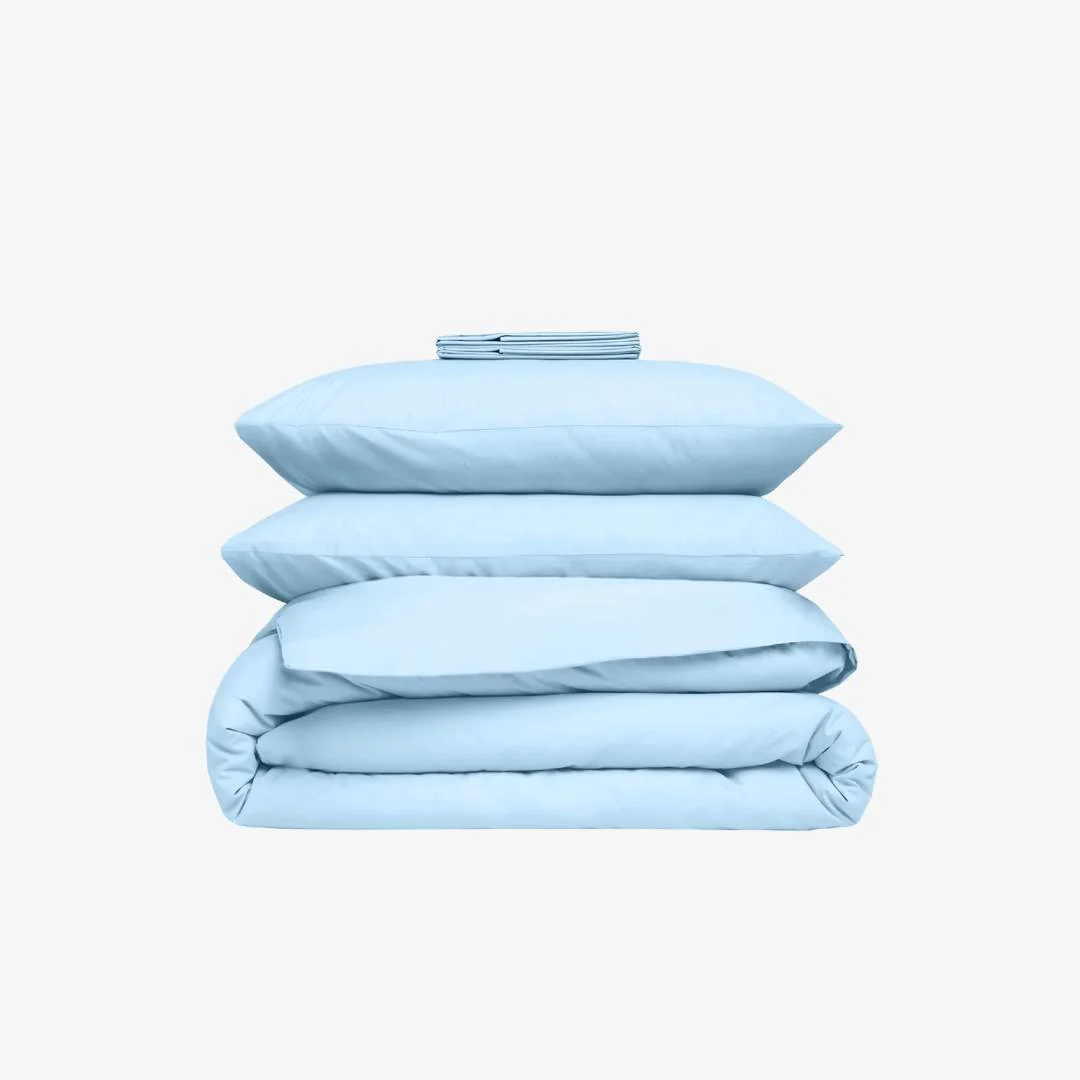
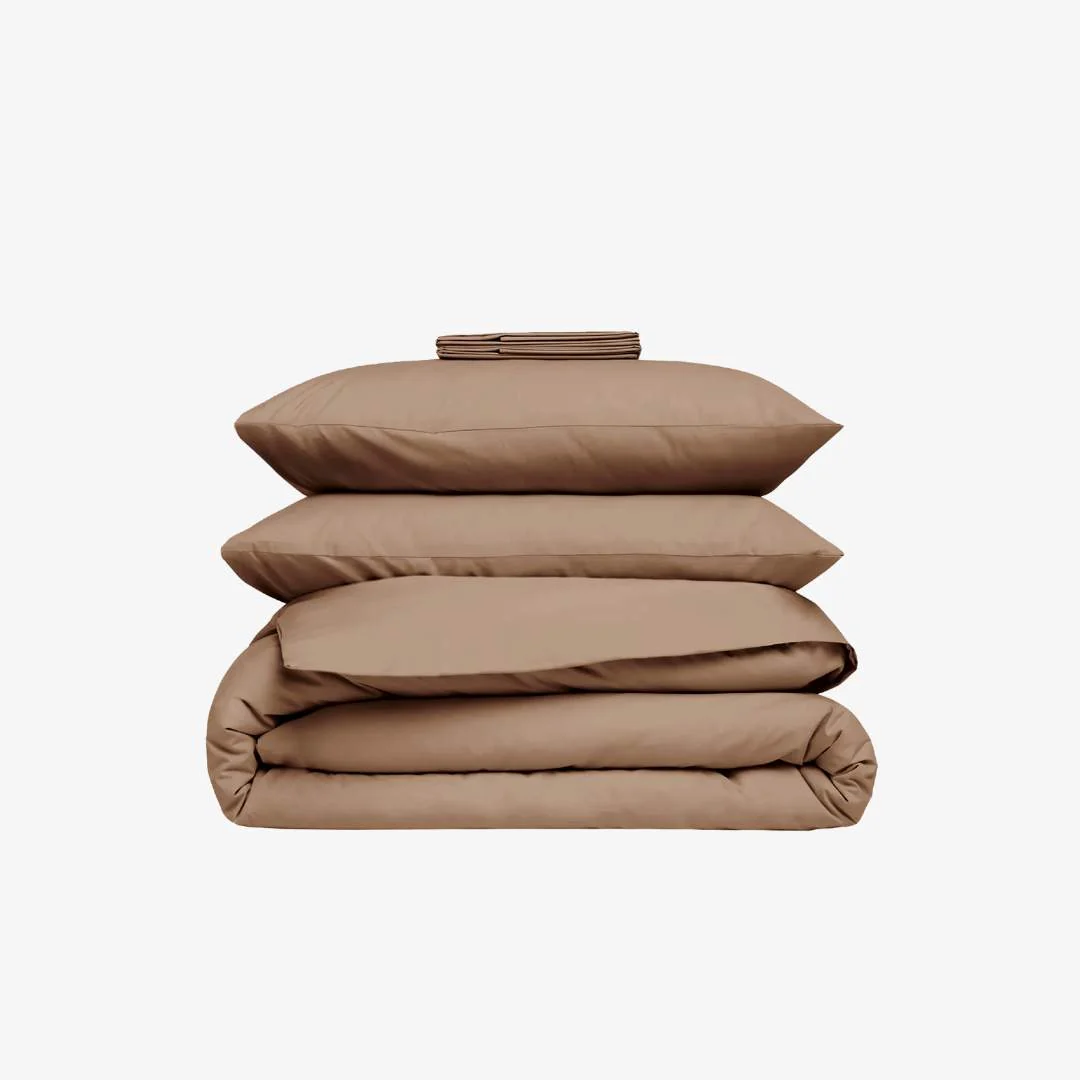
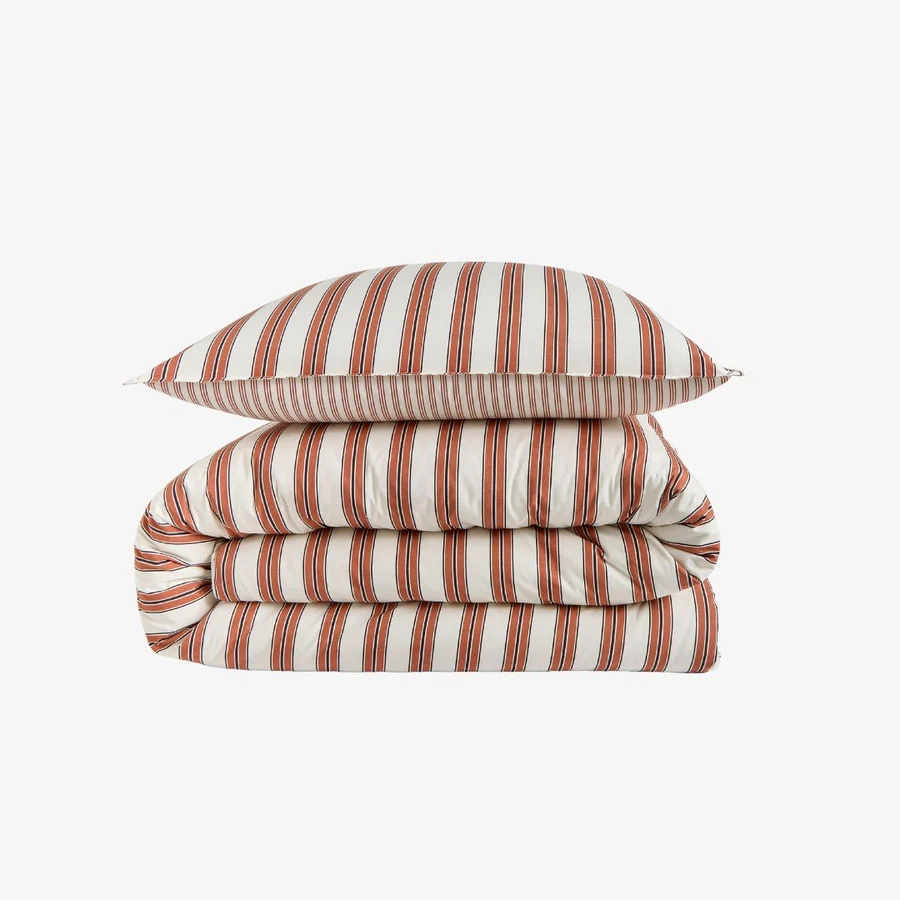
The washed linen duvet cover brings a textured and natural dimension to the duvet. Available in all the common dimensions (140x200, 200x200, 220x240, 240x260), it exists in white, beige, terracotta, storm blue or sage green versions.
Its characteristic crinkled look falls naturally on the bed without requiring any particular adjustment, which immediately gives a carefully decorative result.
Washed linen fitted sheet and flat sheet
The washed linen fitted sheet comes in 90x190 for the child's bed, 140x200 for the double bed, 160x200 and 180x200 for large beds. Its suppleness makes it easy to slip on despite the robustness of the fibre.
The washed linen flat sheet recovers all its nobility in this material. Its natural drape and its slight crinkle make it a piece of strong aesthetic value, which transforms the atmosphere of a bedroom.
Cushions and pillowcases
Washed linen cushions and pillowcases complete the ensemble. Their texture brings visual and tactile relief, and their care, identical to the rest of the set, simplifies the management of home linen.
Colours and finishes of washed linen
Washed linen absorbs dyes in a particular way, which gives deep but slightly nuanced shades, specific to the material.
Off-white, beige, natural linen and natural tones remain the safe bets, favoured for their timeless side and their ease of integration. Terracotta, storm blue, sage green, powder pink and pearl grey are among the on-trend colours that highlight the texture of the fabric.
On the finishes side, there is mainly plain linen, sometimes striped tone on tone or edged with a contrasting border. Prints are rarer but do exist, generally on a light background to preserve the legibility of the pattern on the textured weave.
Washed linen or other natural materials: how to choose
Washed linen is often compared with other natural materials used for bed linen, each having its specifics.
Cotton gauze shares with washed linen a crinkled look and a lightness, but remains more airy and less structured. Gauze is also softer straight away, whereas linen calls for a few washes to reveal all its potential.
Cotton percale relies on freshness and a matt finish, with a tight weave that creases in the wash and calls for ironing. Washed linen avoids that chore while keeping a refined character.
Cotton sateen offers a radically different approach, with its shine and its silky feel. Washed linen plays in a rawer and more natural register, where sateen evokes rather luxury and sophistication.
The choice depends on the style sought and the preferred sensation at bedtime. Washed linen appeals to those who favour authenticity, durability and simplicity of care.
How to care for washed linen?
Washed linen is among the simplest materials to care for on a daily basis. A few rules make it possible to preserve its qualities over the long term.
Washing and temperature
Wash washed linen at 30 °C or 40 °C for everyday use, on a normal cycle. Linen being a robust fibre, it occasionally withstands 60 °C, notably for a hygienic wash of the sheets.
Use a mild detergent, preferably liquid. Avoid aggressive detergents, bleach and fabric softeners, which dull the fabric and reduce its natural absorption capacity.
Set the spin to 800 revolutions per minute maximum to limit excessive creasing and preserve the fibres.
Drying and ironing
Open-air drying remains preferable. Take the linen out while still slightly damp to make stretching easier and hang it out quite flat. Avoid drying directly in the sun to preserve the colours.
Putting it in the tumble dryer is possible at low temperature, but it wears out the fibres more quickly and accentuates the crinkle.
Washed linen is not ironed: its crinkled look is part of its charm. If you nevertheless wish to do so, iron with steam, on the reverse side and never dry so as not to damage the fibres.
Does washed linen shrink?
Like any natural textile, washed linen can shrink slightly in the first wash (generally 2 to 5%). This margin is anticipated by the manufacturers, who size the pieces slightly larger to compensate.
The following washes no longer cause any significant shrinkage, and the fabric durably keeps its initial size.
Washed linen for curtains and decoration
Beyond bed linen, washed linen also equips curtains and certain elements of interior decoration. Its fluidity, its natural drape and its capacity to filter light make it an appreciated choice for dressing windows.
Washed linen curtains are found in classic versions, blackout versions (with a lining) or as translucent sheers. The wide widths (up to 280 or 300 cm) make it easier to make them without visible seams for patio doors.
The care of curtains follows the same rules as that of bed linen, with heightened vigilance over temperatures so as not to weaken the hems and seams.
Whether for dressing the bed or the windows, washed linen offers a timeless, durable and deeply natural material. Its robustness, its thermal comfort and its minimalist care explain its success with all those looking for home linen that combines style and authenticity.