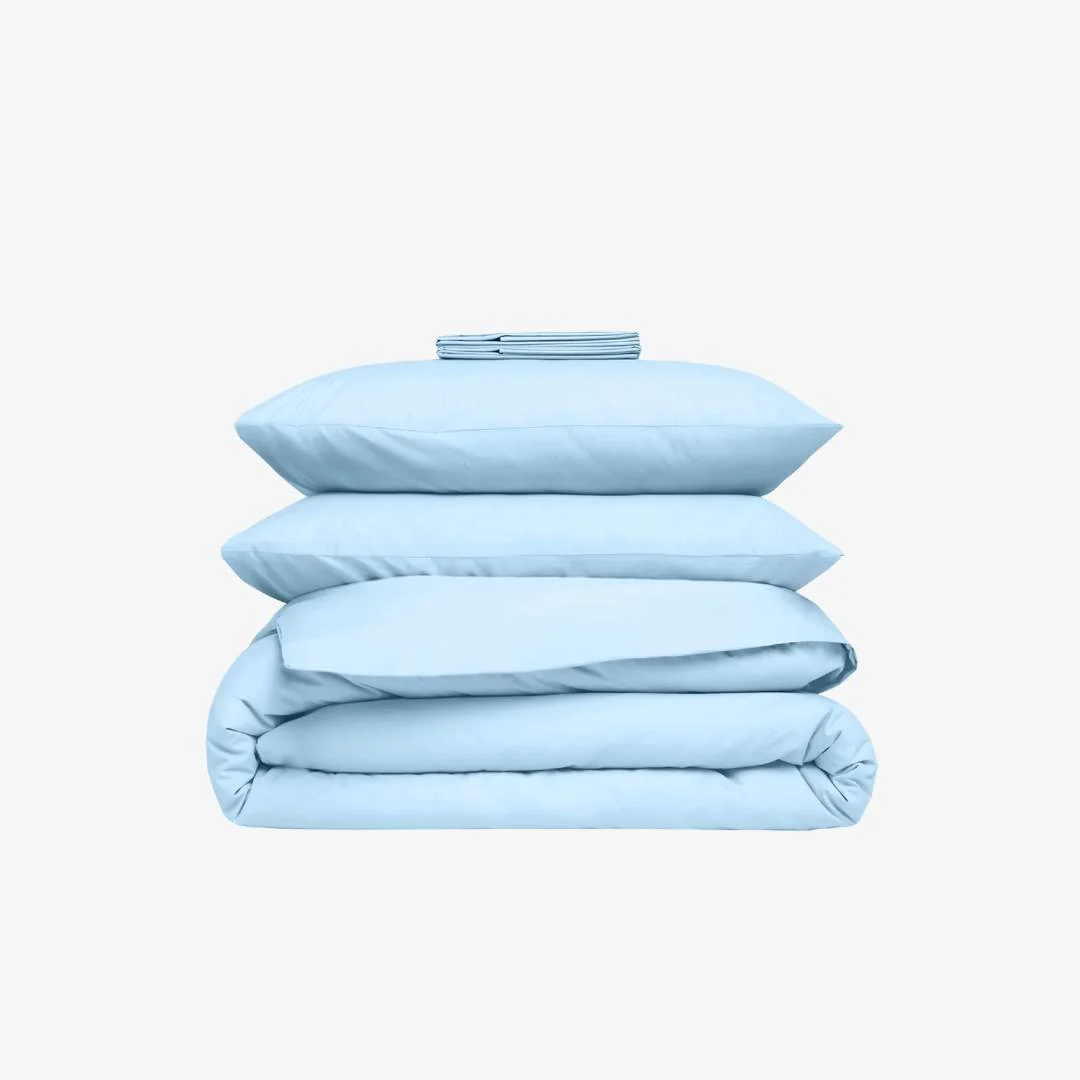
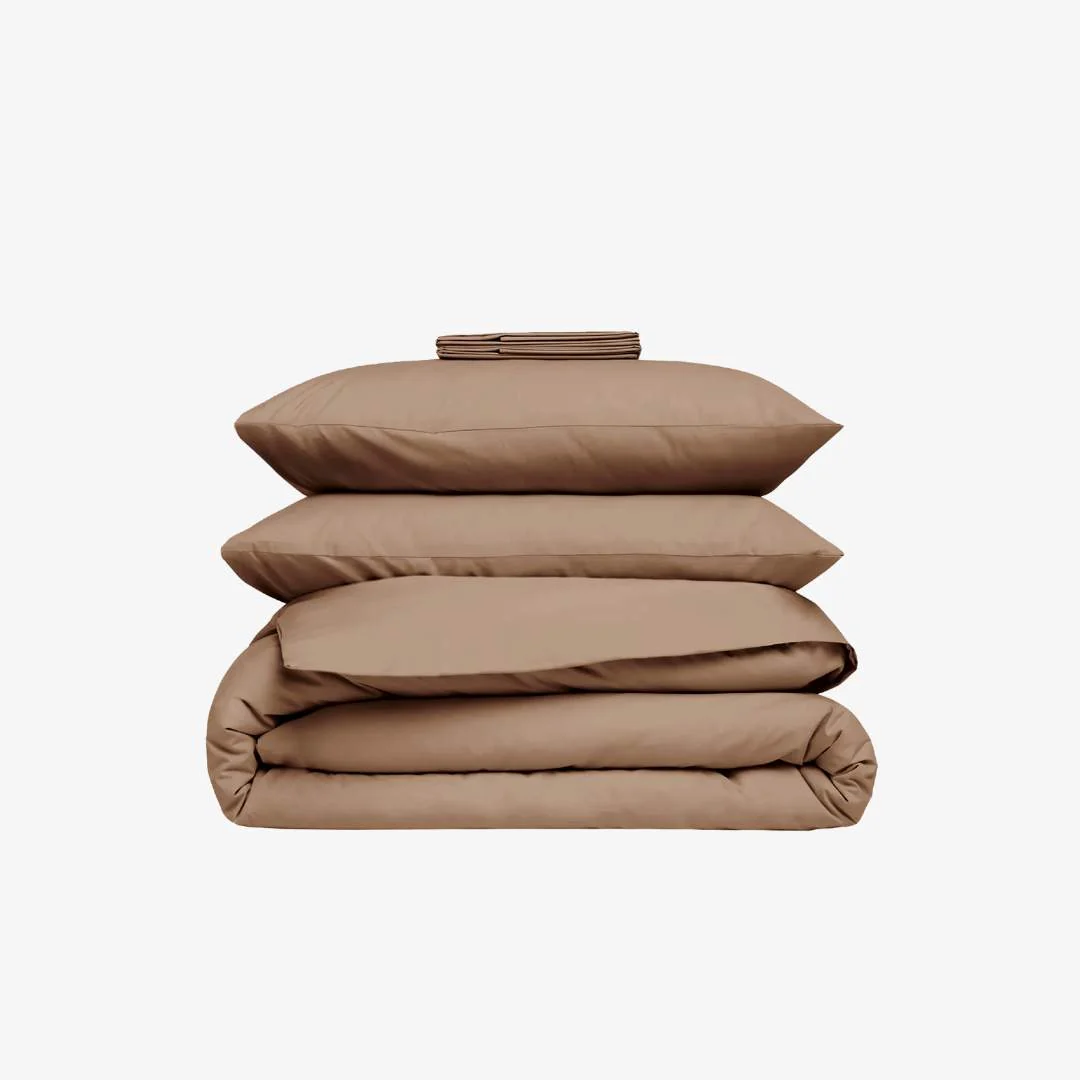
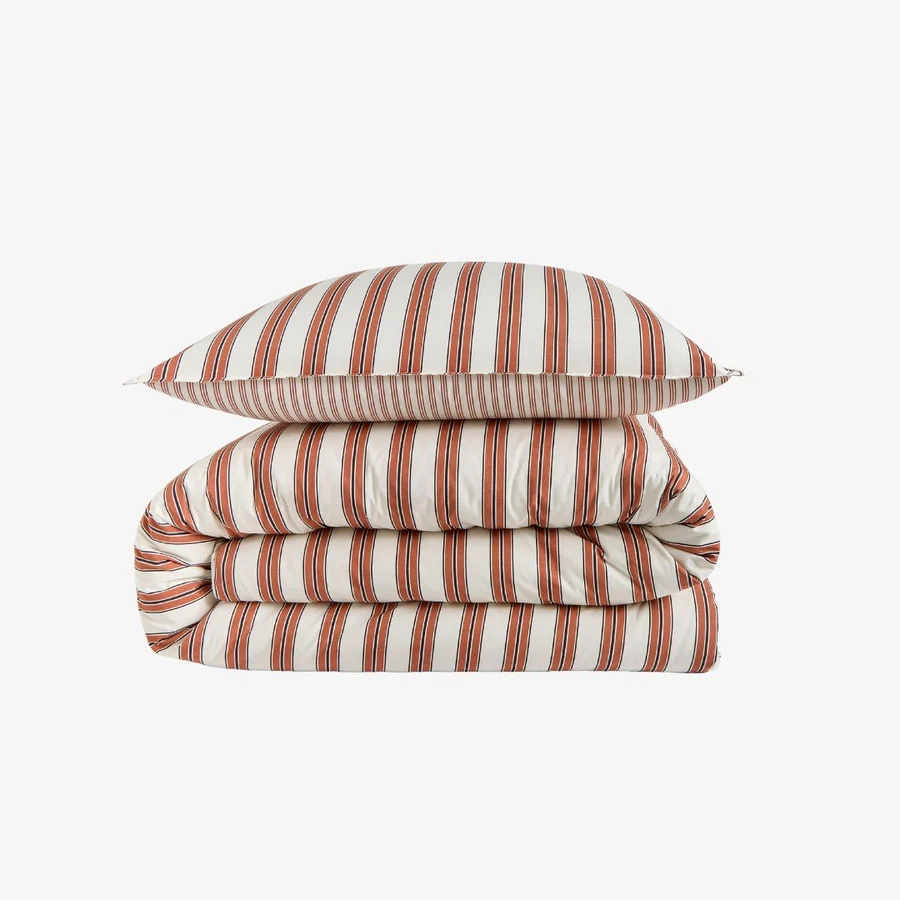


Cotton gauze appeals through its lightness, its crinkled look and its enveloping softness. This on-trend material has established itself in recent years in French bedrooms, from the master bed to the baby's room.
This guide explains what cotton gauze really is, how to tell its single, double and triple versions apart, why it is so popular for bed linen, and how to care for it so that it lasts.
What is cotton gauze?
Cotton gauze refers to a 100% cotton woven using a very particular technique, which deliberately leaves the threads spaced apart to create an airy and slightly transparent effect. The result is a fine, light fabric, naturally crinkled and particularly breathable.
Unlike percale or sateen, whose weave is tight, gauze relies on the opposite: a loose weave that gives loft and suppleness. This choice explains its characteristic texture, halfway between cotton voile and washed linen.
A light and airy weave
The gauze weave is based on threads that are more widely spaced than in a classic fabric. This construction lets air through, which makes the material exceptionally breathable, ideal for hot nights or skin that perspires.
The cotton used stays supple without becoming transparent when the weave is doubled or tripled. It is precisely this flexibility that makes it possible to offer gauze in several thicknesses depending on the end use.
An ancient origin
Gauze takes its name from the city of Gaza, where it originates. Exported to France at the end of the Middle Ages, it long served to make dance tutus, before establishing itself as the material of choice for home linen and light clothing.
Its appearance comes close to linen through its natural texture, while remaining more supple and more affordable.
Single, double or triple gauze: what are the differences?
Not all cotton gauzes are equal. The number of layers superimposed at the time of weaving determines the thickness, the warmth and the use of the final fabric.
Single gauze: the finest
Single cotton gauze is the airiest version. Very fine, slightly transparent, it lends itself more to making light summer garments (shirts, tunics, summer dresses) than to bed linen.
In sewing, it appeals through its fluidity and its natural drape, but its fineness calls for linings on pieces that must not be see-through.
Double gauze: the benchmark for bed linen
Double cotton gauze superimposes two layers of fine gauze bound by regular weaving points. This process gives a thicker, more opaque fabric, without losing the lightness that makes the material so charming.
It is by far the version most used for bed linen. Its plush texture, its relaxed crinkled side and its softness make it a classic of contemporary bedrooms.
Triple gauze: density and warmth
Triple gauze adds a third layer, which creates a denser and warmer material. It is particularly suited to cool seasons and to sleepers who feel the cold, or for making blankets, jackets and throws.
Over the course of washes, triple gauze naturally relaxes and gains still more suppleness. Light steam ironing can also relax the fibres if needed.
Why choose cotton gauze for your bed linen?
Several qualities explain the current enthusiasm for this material in bedrooms.
Lightness comes first: a gauze sheet weighs much less than a percale or sateen sheet, which changes the sleeping experience. The sensation is less enveloping, more airy.
Breathability follows directly from this. The loose structure of the fabric lets air circulate, which naturally regulates body temperature, in summer as in winter.
The deliberate crinkled look does away with any ironing. The sheet kept as it is has a relaxed, almost bohemian charm, which goes well with natural and minimalist decors.
Softness finally improves over time. Wash after wash, gauze becomes more supple and softer to the touch, without ever losing its character.
Cotton gauze bed linen: duvet cover, fitted sheet, bedding set
Cotton gauze is today found in every piece of bed linen. Its standard dimensions make it possible to equip every bed size.
Cotton gauze duvet cover
The 200x200 cotton gauze duvet cover suits the standard 140 cm double bed. It is found in all the common dimensions: 140x200, 220x240, 240x260, and even 260x240 for large beds.
The visual result is immediately recognisable: a slightly waffled look, a natural drape and colours that fit into every contemporary decor.
Cotton gauze fitted sheet
The cotton gauze fitted sheet comes in 90x190 for the child's bed, 140x190, 160x200 for queen size, 180x200 and 200x200 for large beds. The perimeter elastics ensure a good hold despite the suppleness of the fabric.
The 60x120 and 70x140 formats meet the needs of the cot, with a material particularly suited to the sensitive skin of infants.
Cotton gauze for baby
Cotton gauze is a material of choice for the youngest children's room. Its softness, its breathability and its natural side reassure parents. Versions certified Oeko-Tex Standard 100 guarantee the absence of harmful substances, a useful marker for the delicate skin of babies and children.
Cotton gauze, percale or sateen: how to choose
Three materials dominate the current offering of cotton bed linen, each with its own specifics.
Gauze appeals through its lightness, its crinkled side and its simplified care without ironing. It is the ideal choice for lovers of relaxed and airy linen.
Cotton percale relies on a tight weave that gives a matt, fresh and crisp feel. It suits perfectly those sleepers who like the crisp sensation of a freshly ironed sheet.
Cotton sateen brings shine and a silky feel, with a more refined result and better insulating power in winter.
The choice depends on the style sought and the preferred sensation at bedtime. No material is better in absolute terms, they simply answer different desires.
Available colours and finishes
Cotton gauze lends itself to a very wide palette of colours. Soft and natural tones take particularly well on it.
White and beige remain the safe bets for their brightness and their ease of integration. Terracotta, sage green, powder pink and storm blue are among the on-trend colours that highlight the waffled look of the fabric.
On the finishes side, there is plain gauze (the most common), floral printed versions, polka dot or graphic patterned models. The structure of the material gives a slightly blurred result that naturally softens the patterns.
How to care for cotton gauze?
Well cared for, cotton gauze keeps its softness and its characteristic look for years. A few simple rules are enough.
Washing and temperature
Machine wash gauze at 30 °C or 40 °C maximum, on a delicate or normal cycle. Avoid higher temperatures, which weaken the fibres and can relax the fabric excessively.
Choose a mild detergent, preferably liquid, and limit fabric softener, which dulls the material. Wash colours together to avoid any transfer of dye on the first wash.
Tumble dryer: to be avoided
Putting cotton gauze in the tumble dryer is strongly discouraged. The heat quickly damages the structure of the fabric, relaxes the fibres and can make some pieces shrink.
Favour flat drying or drying on a rack, in the open air and away from direct sunlight to preserve the brightness of the colours. The fabric dries quickly thanks to its airy structure.
Ironing: unnecessary
Cotton gauze is not ironed. Its natural crinkle is deliberate and is an integral part of the charm of the material. Trying to smooth it with an iron would make the sought-after effect disappear.
For a more uniform result, hang the linen out quite flat as soon as it comes out of the machine and shake it lightly before laying it on the bed. That is enough for an impeccable result.
Between two washes, airing the bedroom and shaking the sheets keeps them fresh. The ideal washing frequency is between one and two weeks in daily use.
Cotton gauze in sewing and clothing
Beyond bed linen, cotton gauze is also used in garment making. It is found in shirts, blouses, dresses, skirts, summer trousers, pyjamas and light sets, particularly for women's collections.
Double gauze is the format most used in sewing for clothing: it retains the lightness of the material without the transparency of single gauze. Dressmakers appreciate how easy it is to cut, provided the edges, which fray, are overlocked promptly.
For baby and children's clothing, gauze is highly favoured for its softness and its thermal comfort. Triple gauze is suitable for more structured pieces (jackets, cardigans, blankets) that call for a little more hold.
Whether for dressing the bed or for making one's own pieces, cotton gauze offers a natural, durable and deeply current alternative. Its versatility, its softness and its simplified care explain its success with a public looking for linen that is less formal but just as high in quality.