

Choosing the right duvet cover rarely comes down to copying the width of the mattress. A duvet hangs over each side of the bed, and it is this overhang that determines both night-time comfort and the look of the bed in the morning. Before looking at the labels, it is better to understand what lies behind each dimension.
Knowing which duvet cover size to choose then becomes simple: you start from the duvet and from the way you sleep, not only from the size of the bed.
Why the size of the cover matters as much as that of the bed
A cover that is too short leaves the duvet poorly covered. A cover that is too large floats, creases and slips during the night. In both cases, the result can be seen and felt.
The width of the mattress is only a starting point. What really counts is the dimension of the duvet that you slide inside, since the cover must fit it without squeezing or gaping.
Two people sharing the same bed do not have the same needs as a single sleeper. The fabric must therefore allow a sufficient margin on each side to remain covering, even when each person pulls the blanket towards themselves.
The simple rule: the cover follows the duvet, not the mattress
Remember this principle before anything else. You first buy a duvet suited to the bed, then a duvet cover with the same dimensions as that duvet. The width of the mattress only serves to choose the initial duvet.
This logic avoids most mistakes. When you reason in the right order, you do not end up with an unsuitable format delivered on the doorstep.
Understanding the drop, the overhang on each side
The drop refers to the length of duvet that hangs on either side of the mattress. A generous drop keeps the bed covered and gives a neat result. A drop that is too short uncovers the shoulders as soon as you move.
For a single sleeper, twenty to thirty centimetres of overhang per side is enough. For a couple, you aim wider, because two bodies mobilise more fabric during the night.
Temperate, summer or winter duvet: does the size change?
The season influences the filling, not the dimensions. A well-lofted winter duvet takes up more volume, so a cover that is too tight will compress the filling and reduce its insulating power.
If you alternate between a light duvet in summer and a thick model in winter, keep the same cover provided that it lets the bulkiest filling breathe. It is the latter that sets the margin to allow for.
The criteria that really make the difference
Beyond the centimetres, several parameters guide the choice. Reviewing them avoids going back on your decision once the linen is in place.
You sleep alone or as a couple
A single bed forgives small differences in size. For two, the slightest cover that is too tight results in pulling and an uncovered side on waking. Sharing the duvet always pushes you to go one step up.
The thickness of the duvet and its filling
A natural goose down duvet lofts more than a synthetic filling of the same weight. The greater the volume, the more ease the cover must offer so as not to crush the fibres and to keep a soft touch.
The height of the mattress and the mattress topper
A thick mattress, topped with a mattress topper, eats into part of the available drop. On this type of raised bed, it is better to compensate with a slightly larger cover in order to keep a visible overhang on both sides.
Your habits during the night
A restless sleeper moves the duvet a great deal over the hours. If you move often or change position, a slightly roomier cover stays covering despite the movements. Calm sleepers, for their part, are content with the exact format without discomfort.
Standard sizes and who they suit
Manufacturers offer a handful of dimensions that cover the vast majority of French beds. A single bed is content with a compact format, a large double bed calls for a markedly wider cover.
Between these two extremes, several intermediate formats make it possible to adjust the drop as closely as possible to your wishes. The right choice therefore depends less on a fixed rule than on your bed and your habits.
Rather than remembering all the figures by heart, start from your bed. To match each bed width with the right dimension, our guide which duvet cover size according to the size of the bed details each case, from the single bed to the large king format.
Material and care: what also influences your choice
The dimension is not the only criterion. The fabric changes thermal comfort, the feel and the way the cover ages over the washes.
A tight weave such as cotton percale stays cool and crisp, ideal for sleepers who get hot. Cotton satin plays on softness and a silky drape. Oeko-Tex certified cotton, for its part, guarantees the absence of harmful substances in the textile.
Also think about the possible shrinkage at the first wash. A quality cotton moves little, but allowing a margin avoids unpleasant surprises on an already tight format.
Does the cover have to be identical to the duvet to the centimetre?
Not quite. The cover must take up the stated dimensions of the duvet, but a tolerance of a few centimetres remains without consequence. The fabric stretches slightly once the filling is slid inside.
It is better to have a very slightly larger cover than a model that is too tight. A tight format compresses the duvet, marks creases at the corners and makes changing the linen more complicated. Ease of filling takes precedence over absolute precision.
Cover, pillowcases and bedding set: thinking of the bed as a whole
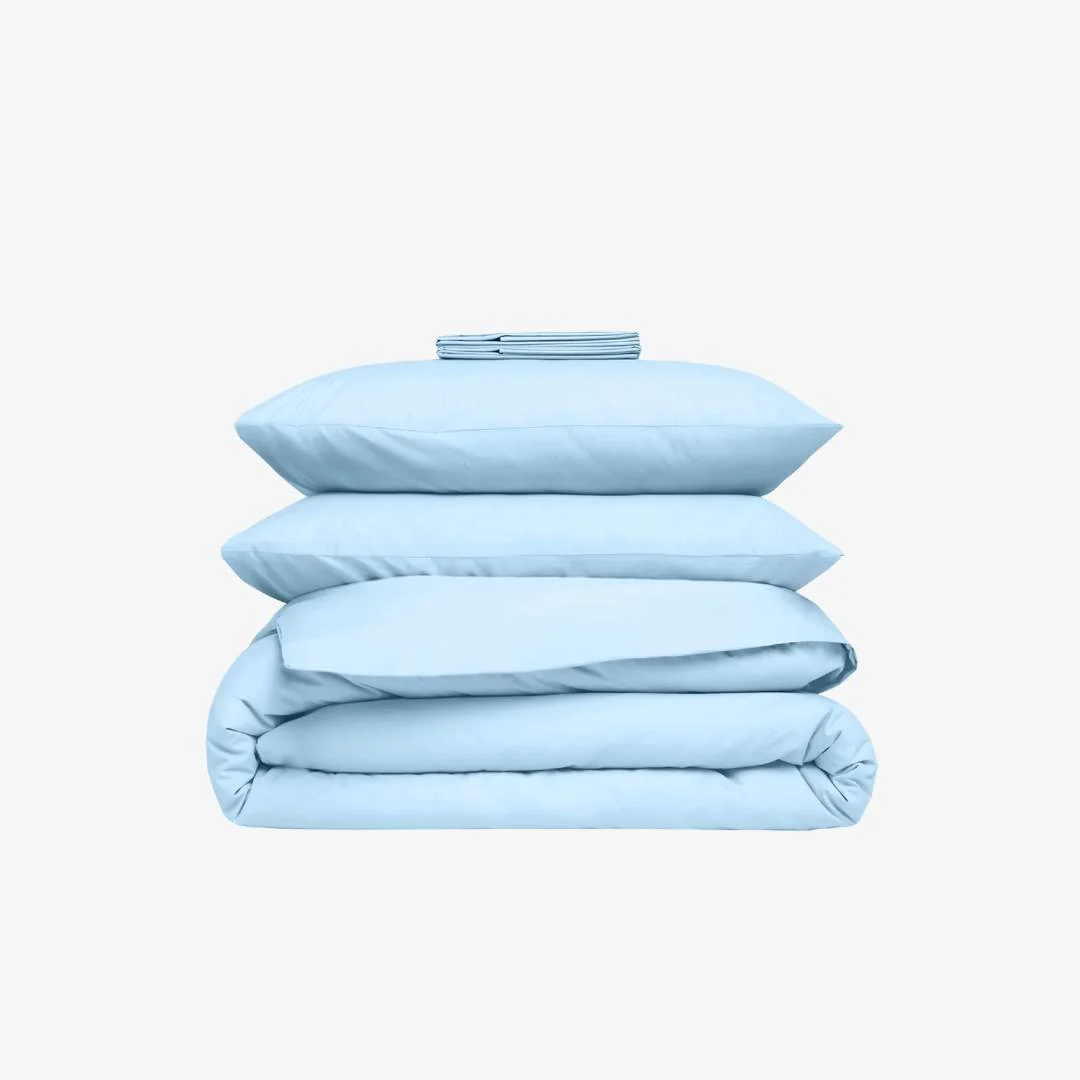
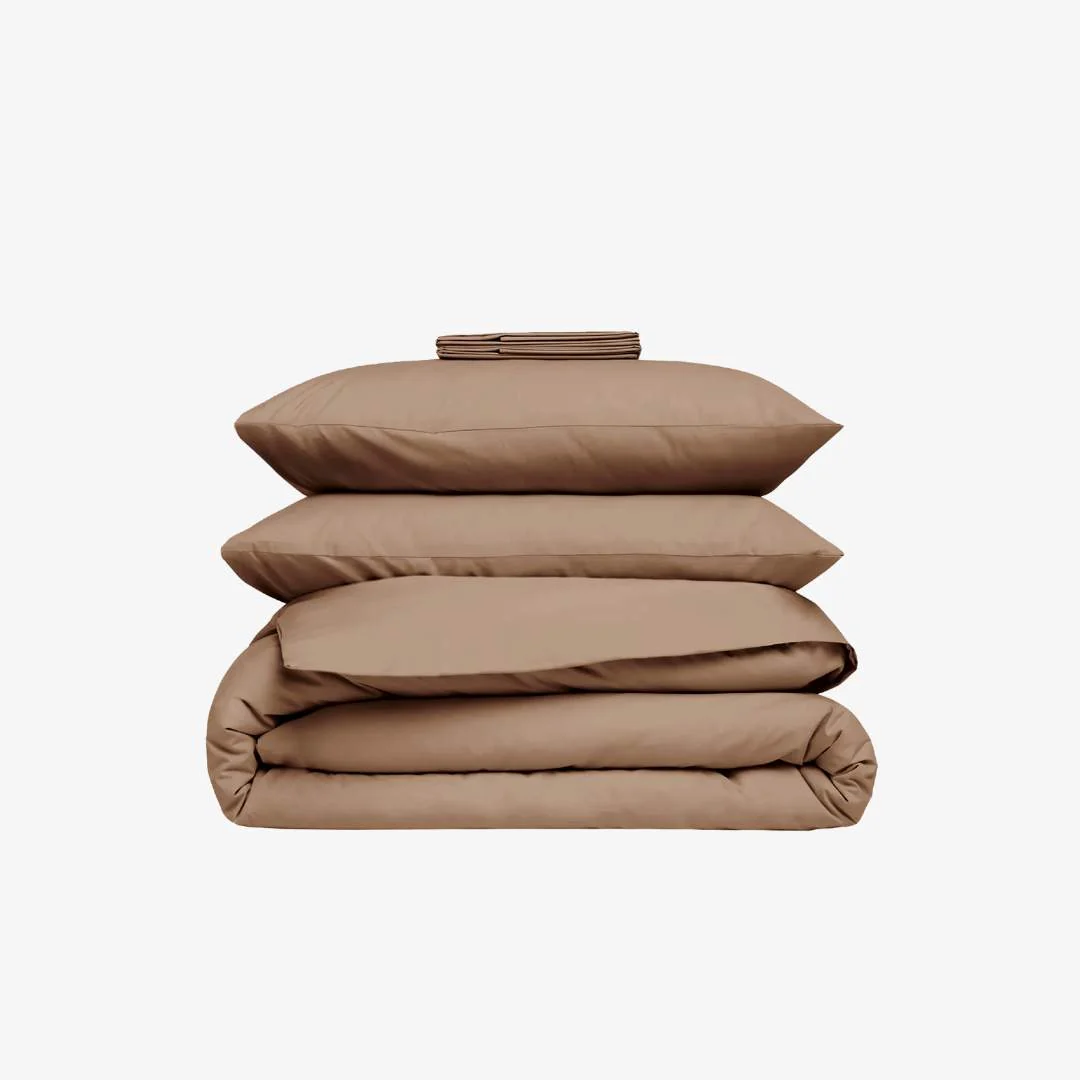
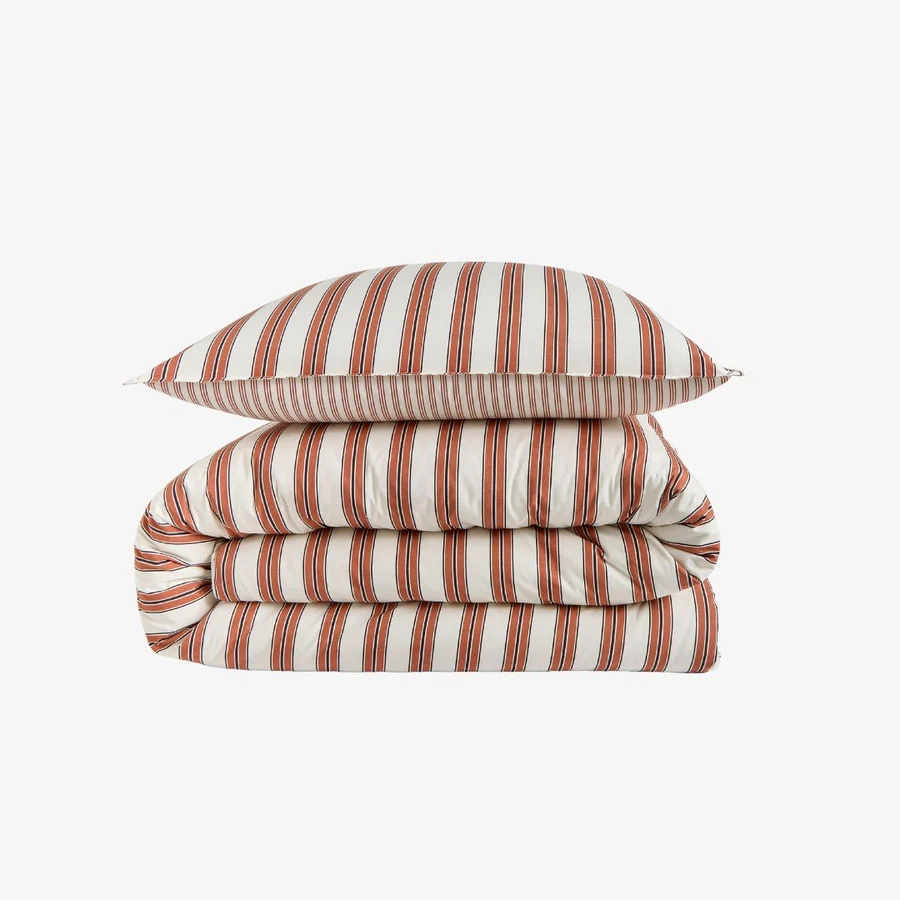
The duvet cover is rarely chosen on its own. It is part of a complete bedding set, alongside the fitted sheet that fits the mattress and the pillowcases that dress the pillows.
For a coherent result, these elements often share the same material and the same shade. Their dimensions, on the other hand, remain independent: the same bed combines without any problem a wide cover and pillowcases in the standard or square format.
If you are renewing the whole set, first match the duvet to the bed, then complete with matching pillowcases. This reflex keeps a visual harmony without imposing a single dimension on all the bed linen.
Frequent mistakes when choosing
A few reflexes come back often and distort the result. Knowing them in advance saves time and a little money.
- Relying on the width of the mattress instead of the dimension of the duvet to be dressed.
- Taking a cover that is too tight, which compresses the filling and makes it lose loft.
- Forgetting the height of the mattress and the mattress topper, which reduces the actual drop.
- Neglecting the sharing of the blanket when you sleep as a couple and aiming for a format that is too short.
How to check that the cover will fit before ordering
First measure your duvet, label in hand or tape measure laid flat. Then compare this figure with the stated dimensions of the cover, which must coincide to within a few centimetres.
Take the material into account along the way. A tightly woven cotton moves little in the wash and keeps its dimensions over time, which secures a format already tight on the duvet.
Finally, check the desired drop on each side of the bed, taking into account the thickness of the bed. If the slightest doubt remains between two formats, the larger one almost always turns out to be the best compromise: a slight surplus of fabric remains more comfortable than an uncovered side in the early morning.